Helpful Gabion Wall Information
BBA APPROVED FOR USE OF
RETAINING WALL APPLICATIONS
BBA Certificate Number: 05/4215 held by Link Middle East Ltd
Customer Images
Help Videos
| What’s Included? |
Play Video |
| Strength difference between 3mm, 4mm and 5mm |
|
| How to build a freestanding wall |
|
| How to build a retaining wall |
|
| How to assemble with Helicals |
|
| How to assemble with Tying Wire |
|
| How to install and save money with a stone separating panel |
|
| How to stop bulging with corner ties |
|
More videos and helpful information can be found on our Gabion Hub page
| What’s Included? |
Play Video |
| How to build a freestanding wall |
|
| How to build a retaining wall |
|
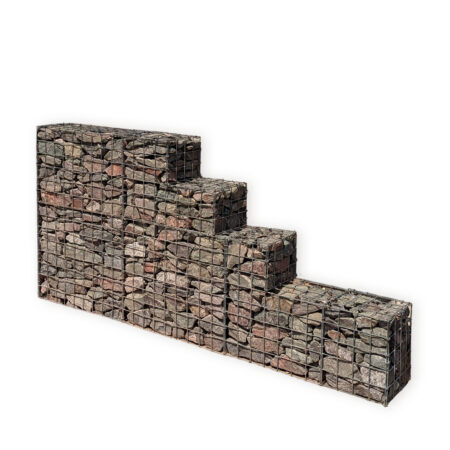
| How to make steps |
|
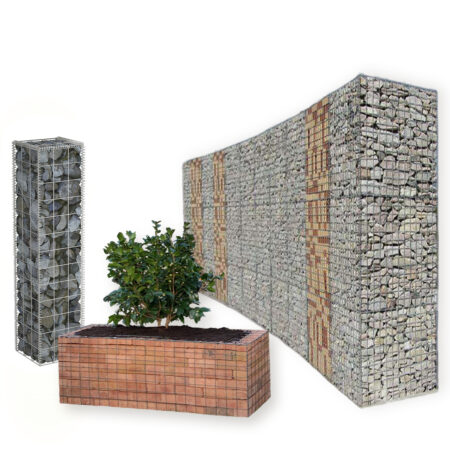
| How to make a planter |
|
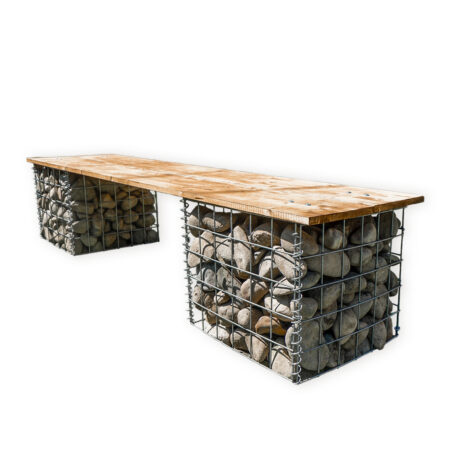
| How to make a table |
|
| How to make a curved gabion |
|
| What’s Included? |
Play Video |
| Behind-the-scenes tour of our warehouse in Tutbury |
|
| Behind-the-scenes look at our team manufacturing a gabion |
|
Which Wire Diameter?
|
Galfan Coated |
PVC Coated |
|
3mm Wire Diameter |
4mm Wire Diameter |
5mm Wire Diameter |
3.2mm Wire Diameter |
4.3mm Wire Diameter |
| Freestanding wall |
|
|
|
|
|
| Retaining walls (up to 5m) |
|
|
|
|
|
| Retaining walls (5m and over) |
|
|
|
|
|
| Erosion control |
|
|
|
|
|
Coastal
protection |
|
|
|
|
|
| Delivered as
|
Flat packed in small to large truck depending on order quantity |
| Delivered with
|
Delivered with FREE tying wire |
| Also available |
Helicals for quicker assembly of
the 4 vertical corners (ordered separately) |
| Also available |
Corner ties to prevent
bulging (ordered separately) |
| Can wires be cut |
Yes – with a good wire cutter |
| Made in UK |
Yes |
| Conforms to British manufacturing standard |
BS EN 10223-8:2013 |
| Certificate of conformity |
Yes – download |
| Mesh Hole Size
|
75mm x 75mm |
75mm x 75mm |
75mm x 75mm |
75mm x 75mm |
75mm x 75mm |
| Mesh Material
|
Galfan coated steel |
Galfan coated steel |
Galfan coated steel |
Galfan coated steel with PVC coating |
Galfan coated steel with PVC coating |
| Mesh Construction |
Welded |
Welded |
Welded |
Welded |
Welded |
| Mesh panels joined
together by
|
Stainless steel C Clips |
| Tensile strength range |
540-770 N/mm² |
540-770 N/mm² |
540-770 N/mm² |
540-770 N/mm² |
540-770 N/mm² |
| Corrosion resistance |
Yes, conforms to British standard BS EN 10244-2:2009 |
| Abrasion resistance |
Conforms to EN 60229:2008 |
| Life Expectancy |
50 – 100 years |
50 – 100 years |
50 – 100 years |
120
years |
120
years |
| Suited to Environments |
C2 – C4 |
C2 – C4 |
C2 – C4 |
C2 – C5 |
C2 – C5 |
| Speed of installation |
2-5 mins each |
| Experience required to install |
Easy install |
| Depth of structure |
Minimum half of the height |
| Rock size required
|
Minimum 80mm x 80mm |
| Requires angular, interlocking rocks |
|
|
|
|
|
| Can be filled with crushed concrete |
|
|
|
|
|
| Can fill with rounded rocks |
|
|
|
|
|
Design & Installation
Installation Guidelines
Retaining Wall Design
Freestanding Wall Design
| Height & Loads |
|
1.5m or Less & Low Loads
X – Engineer required

|
A retaining wall does not require an engineer’s calculation when it meets the following criteria
- It is lower than 1.5m tall
- It is retaining flat earth
- It is not retaining heavy loads such as roads or buildings
- The ground does not have a lot of groundwater
|
|
1.5m+ or Large Loads
Y – Engineer required

|
A retaining wall does require an engineer’s calculation when it meets the following criteria
- It is taller than 1.5m
- It is retaining sloped earth
- It is retaining heavy loads such as roads or buildings
- The ground has a lot of groundwater
|
| Basecourse

|
1.5m or less & low loads
Show Image
- Remove softer top soils until you get to firmer subsoil
- Replace with 10-30 cm of type 1 basecourse
- Compact the basecourse
1.5m+ or large loads
Show Image
- Foundations should be 500mm below ground to prevent slipping.
- Add a 30-50cm layer of type 1 basecourse
- Compact the basecourse using a plate compactor
|
| Shape

|
1.5m or less & low loads (i)
- Can be built without the step, as long as the ground is flat and it is not retaining a large amount of weight, such as a road or buildings
1.5m+ or large loads (i)
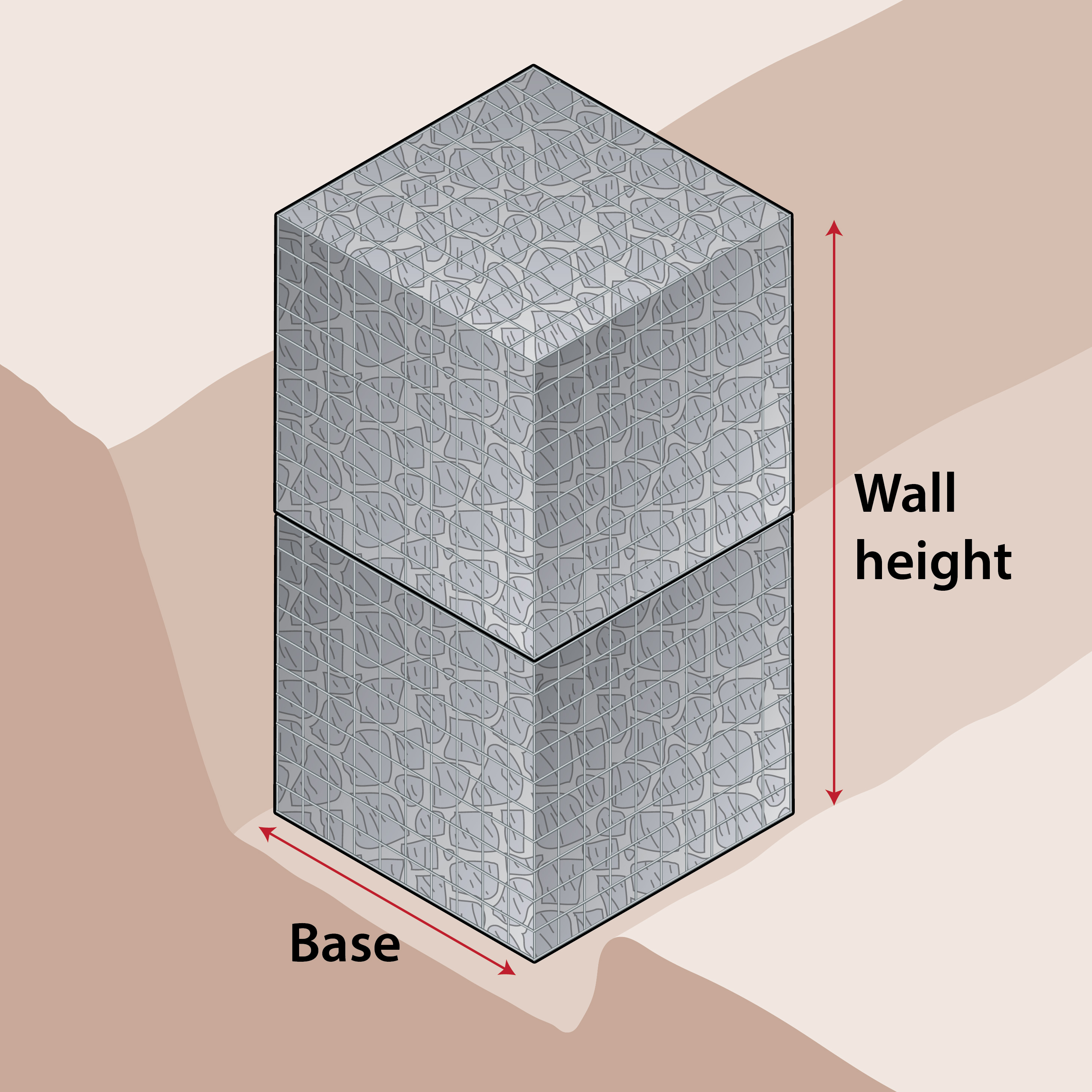
- Usually requires a stepped shape. The depth of the bottom row is half of the height.
- Consult a Structural Engineer if you are planning a non-stepped shape
|
| 2:1 Ratio

|
1.5m or less or low loads (i)
- The height should not be more than double the size of the base; otherwise, it will not be suitable for a retaining wall.
1.5m+ or large loads (i)
- If you are planning to use a 2:1 ratio and your wall is over 1.5m, you will require a Structural Engineer to check the calculations
|
| 6 Degree Slope

|
1.5m or less or low loads
- The wall should be on a 6-degree slope leaning into the earth to improve the strength and stop slipping.
1.5m+ or large loads (i)
- The wall should be on a 6-degree slope leaning into the earth to improve the strength and stop slipping.
|
| Geotextile

|
1.5m or less or low loads
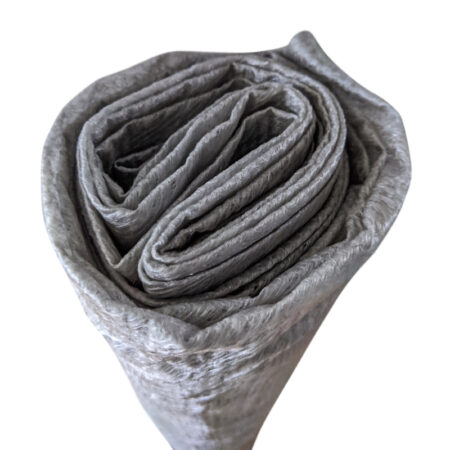
- Cover the back of the cages with a geotextile or weed mat to prevent soil and earth clogging up behind.
- Install a drainage pipe, then cover it with 10cm of gravel for drainage
1.5m+ or large loads
- Cover the back of the cages with a geotextile to prevent soil and earth clogging up behind.
- Install a drainage pipe, then cover the back of the wall with 20cm of gravel for drainage
- The drainage gravel should be installed within 15cm of the top
|
| Illustration |
How to |
1m High Wall
|
Equipment Required
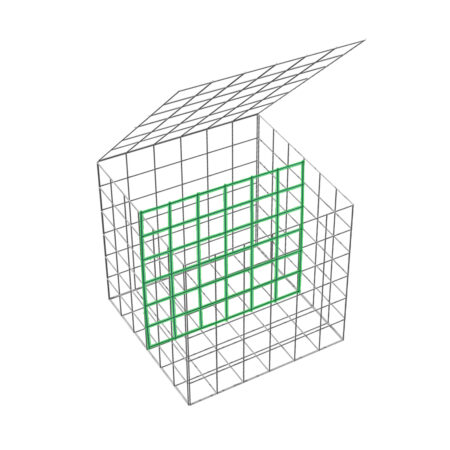
- Use sizes 1x1x1m or 2x1x1m – visit our calculator page
- All wire diameters are suitable, but we suggest 4mm+ if you would like to prevent bulging
- Attach using helicals
- Save money using partitions
- Allow drainage using geotextile (i)
|
| 2m High Wall

|
Equipment Required
- Use 1x1x1m & 1.5x1x1m baskets – visit our calculator page
- All wire diameters are suitable, but we suggest 4mm+ if you would like to prevent bulging
- Attach using helicals
- Save money using partitions
- Allow drainage using geotextile (i)
|
3m High Wall
|
Equipment Required
- Use 1x1x1m, 1.5x1x1 & 2x1x1m baskets or visit our calculator page
- All wire diameters are suitable, but we suggest 4mm+ if you would like to prevent bulging
- Attach using helicals
- Save money using partitions
- Allow drainage using geotextile (i)
|
| 4m High Wall

|
Equipment Required
-
- Use 1x1x1m, 1.5x1x1 & 2x1x1m baskets or visit our calculator page
- All wire diameters are suitable, but we suggest 4mm+ if you would like to prevent bulging
- Attach using helicals
- Save money using partitions
- Allow drainage using geotextile (i)
|
5m High Wall
|
Equipment Required
- Use 1x1x1m, 1.5x1x1 & 2x1x1m baskets – visit our calculator page
- All wire diameters are suitable, but we suggest 4mm+ if you would like to prevent bulging
- Attach using helicals
- Save money using partitions
- Allow drainage using geotextile (i)
|
| To Do |
Explanation |
| Up to 1.5m & 2:1 Ratio

|
To ensure stability, freestanding walls should not exceed 2:1
Customer Examples
Show Gallery
|
| Exceeds 1.5m or 2:1 Ratio

|
An internal support post is required if the wall height is exceeds 2:1 ratio or 1.5m height
How To
- The strength of the post will depend on the height and weight of the wall. For medium sized walls use the equivelent of a scaffolding post
- The posts should reach a minimum of 1.5m from the top
- The post should be sunk into the ground approx 1/3 the height of the wall
- Attach the support post to the gabion with bracing wire
- If your pole is hollow, you will need to plug the gap at the top to prevent water from entering.
- Set the post into concrete
Customer Examples
Show Gallery
|
| Foundation

|
Up to 1.5m height
- Remove softer top soils until you get to firmer subsoil
- Replace with 10-30 cm of type 1 basecourse
- Compact the basecourse
- Most low-level and/or wide columns do not usually require a foundation. If your column is 1m+ or narrow you may need a concrete foundation for added stability
1.5m+ height
- Foundations should be 500mm below ground to prevent slipping.
- Add a 30-50cm layer of type 1 basecourse
- Compact the basecourse using a plate compactor
|
| Configuration

|
As long as the cages are installed next to each other and they are attached securely using helicals or tying wire you can use different configurations
Customer Examples
Show Gallery
|
Basket Assembly
Gabions are delivered flat-packed with the sides, bottom, and lid clipped together. Upon arrival, the corners of the gabions should be attached to complete the assembly.
| Corner Assembly Fitting |
|
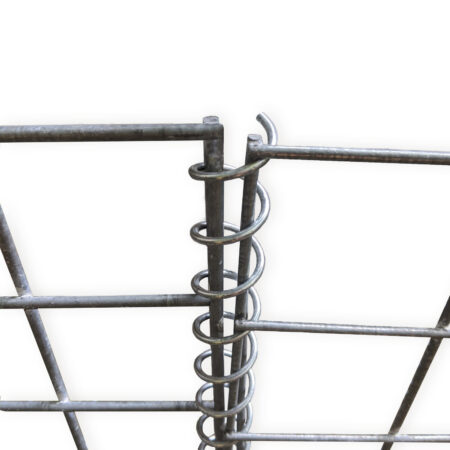
| Using helicals |
Helicals can be purchased separately. 4x helicals are required for assembly
per gabion (one for each corner).PRO: looks uniform and quick to install
CON: additional cost |
Using tying
wire |
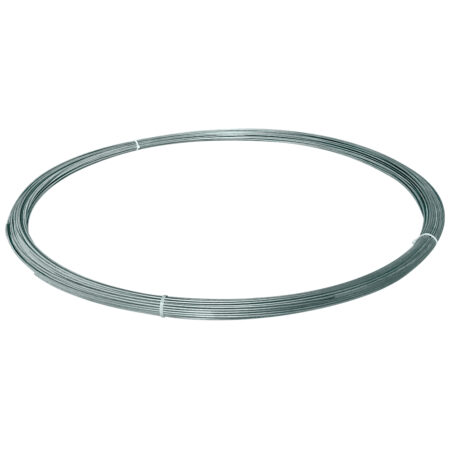
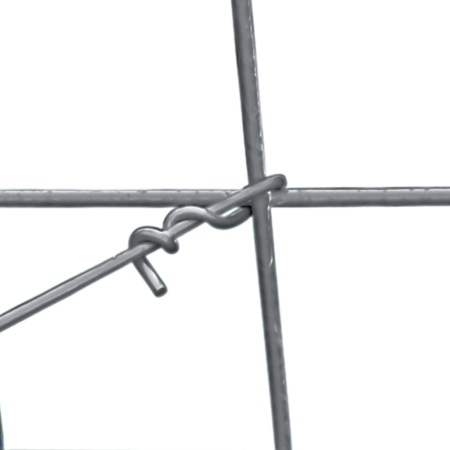
Tying wire is supplied with all gabion orders.
PRO: it’s free
CON: time of installation |
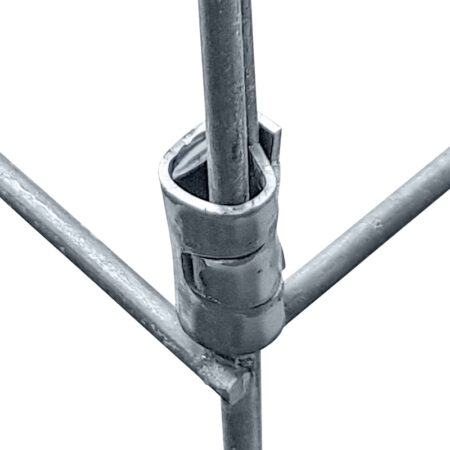
| Using CT35 clips |
Gabion clips are available in bulk quantities. Advised for use by professionals
PRO: discrete / hidden
CON: requires a plier or electronic tool |
FAQs
What is a Retaining Wall?
They are a structure designed to keep earth within the desired area. Often built to prevent soil from sloping into unwanted areas such as motorways.
How expensive are they compared to other options?
They are cheaper than most other construction materials such as concrete that might be used for retaining earth in the same way. They are also very easy to use reducing the need for pay for extra manpower.
What depth should the structure have?
If it’s going to be freestanding, the depth should be at least half of the overall height in order to keep it stable. If it’s going to be reinforced with metal frames for example, you can get away with a smaller depth.
Where do I get the stone?
We supply stone suitable on this page.
You can also quickly calculate the amount of stone you need on this page